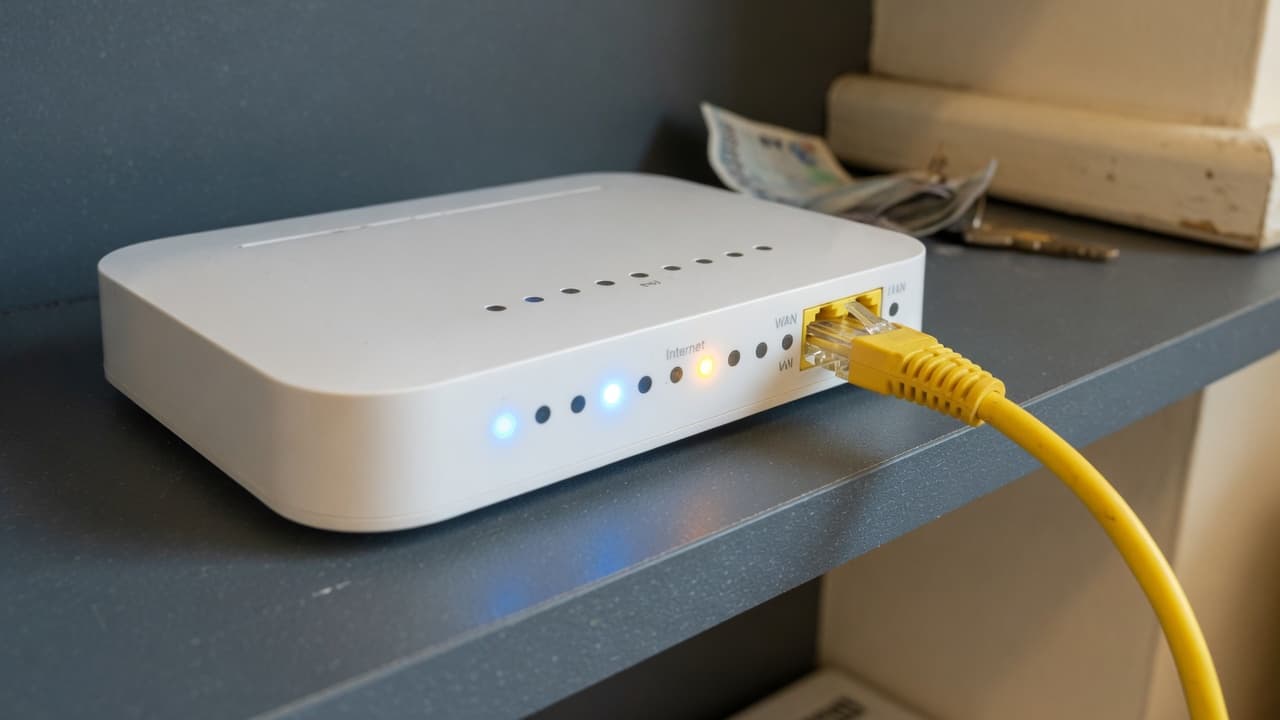
Technology and Speeds
Full Fibre Broadband Explained: Is FTTP Worth It?
Full fibre broadband now reaches 82% of UK premises, and speeds have moved well beyond the old 1Gbps benchmark.
The quick answer
Full fibre broadband now reaches 82% of UK premises, and speeds have moved well beyond the old 1Gbps benchmark. Real current coverage data, speed tiers and prices, plus why full fibre matters for the 2027 landline switch-off.
Key Takeaways
- Ofcom's Spring 2026 data put full-fibre coverage at 82% of UK premises and gigabit-capable coverage at 89%, though it is uneven: 93% in urban areas against 66% in rural areas.
- Full-fibre top speeds have moved well beyond 1 Gbps: Community Fibre offers up to 3,000 Mbps and YouFibre up to 8,000 Mbps on their fastest current tiers, both genuinely symmetrical.
- Full fibre is the natural home for Digital Voice ahead of the 31 January 2027 landline switch-off, though it still needs a backup power solution to keep working during a power cut.
Full fibre broadband, technically known as Fibre to the Premises (FTTP), is the fastest, most reliable home broadband technology available in the UK. Unlike standard “fibre” broadband, which uses copper wiring between the street cabinet and the home, full fibre uses optical fibre all the way from the exchange to the front door, and by Spring 2026 it had reached 82% of UK premises.
FTTP vs FTTC: what's the difference?
FTTC (Fibre to the Cabinet) is still common across the UK. It runs fibre optic cable to the green street cabinet, then uses older copper telephone wire for the final stretch to the home. This limits maximum realistic speeds to around 80 Mbps download, and upload is typically only a fraction of that.
FTTP (Fibre to the Premises) runs fibre optic cable all the way to the home, with no copper in the line at all. Speeds have moved well beyond the old 1,000 Mbps (1 Gbps) benchmark: most national providers now offer a flagship tier around 900 Mbps to 1 Gbps, while several altnets go considerably further, Community Fibre up to 3,000 Mbps and YouFibre up to 8,000 Mbps on their fastest current tiers, both genuinely symmetrical.
Is full fibre available at my address?
Ofcom's Spring 2026 Connected Nations data put gigabit-capable coverage at 89% of UK premises, 27.1 million homes, up from 87% a year earlier, with full fibre specifically now reaching 82%. Coverage is uneven by area though: 93% in urban areas against 66% in rural areas, so a national average tells only part of the story for any specific address. Openreach, which builds and maintains the network used by BT, Sky, EE, TalkTalk and Plusnet, continues to expand its rollout, and altnets including Hyperoptic, Community Fibre, toob and YouFibre are building entirely separate FTTP networks in specific towns and cities on top of that. Rollout is not always purely additive, though: BroadbandPicker's SG1 broadband deals guide covers a genuine, reported case in Stevenage where Openreach paused full-fibre installations in streets with difficult ducting, causing coverage to fall rather than rise.
To check if FTTP is available at a specific address, enter the postcode into our postcode checker.
Is full fibre worth paying more for?
Often yes, and increasingly it does not mean paying much more at all. Community Fibre's entry full-fibre tier starts from £12.50 a month, cheaper than many FTTC packages, though its network remains limited to London, Surrey and Sussex. Full fibre is worth prioritising specifically for:
- Three or more people working, streaming or gaming simultaneously
- Regular video calls that need a stable, fast upload speed, not just download
- Uploading large files regularly, such as photographers, videographers or content creators
- Wanting genuinely symmetrical upload speeds for backups and cloud services, which several full-fibre altnets, including Community Fibre, Hyperoptic and Trooli, now offer on most or all tiers
Full fibre and the landline switch-off
Full fibre connections are also the natural home for Digital Voice, the internet-based phone service replacing the UK's old analogue landline network, which is being fully retired by 31 January 2027. A full-fibre line delivers Digital Voice more reliably than an older FTTC or ADSL connection, though it still depends on the broadband router rather than a separately powered copper line, so it will not work in a power cut without a backup solution meeting Ofcom's minimum one-hour requirement. Our landline switch-off explainer covers the deadline, telecare checks and emergency-calling backup.
Will an engineer visit be needed?
Usually yes, if the property has not previously had FTTP installed. This requires a new optical fibre cable to be run into the property, typically a 2 to 4 hour appointment. Most providers include the installation cost as part of the standard deal, though a separate setup fee can still apply on some packages regardless of whether an engineer visit is needed.
Compare deals now
Today's best broadband deals — sorted by price.
We may earn a commission when you click a “Get Deal” button. This does not affect our editorial independence.
- Best Value

- Speed
- 150 Mbps
- Monthly price
- £12.50/mo
- Contract
- 12 months

- Speed
- 35 Mbps
- Monthly price
- £18.50/mo
- Contract
- 12 months
- Fastest

- Speed
- 300 Mbps
- Monthly price
- £19.00/mo
- Contract
- 18 months
| Provider | Speed | Monthly price | Contract | Affiliate link |
|---|---|---|---|---|
| 150 Mbps Superfast | £12.50/mo | 12 months | |
| 35 Mbps Superfast | £18.50/mo | 12 months | |
| 300 Mbps Ultrafast | £19.00/mo | 18 months |
Frequently Asked Questions
Editorial and Source Notes
We review guides against our published methodology and add source links where external verification materially helps the reader check claims, dates, and regulator-backed context.